In a soundproof booth in Tallinn, an actor frowns at her script. The client—an international streaming service expanding its Baltic offering—has requested “friendly, local, non-cartoonish.” But the script is for a Polish sitcom, heavy on puns and regional gags.
This scene isn’t rare in Estonia’s voice over world. Despite the country’s tiny population (1.3 million), demand for Estonian language voice content has quietly surged since the late 2010s. The tension? Global platforms want scalable, affordable localization; local studios pride themselves on nuance.
Chasing Authenticity Across Small Markets
Unlike Germany or France, where dubbing is an industry onto itself, Estonia’s voice over sector feels artisanal by comparison. Nearly every major project passes through a handful of production houses in Tallinn or Tartu—most notably AB Studios and Soundville.
AB Studios started as a radio ad house in the early 2000s, pivoted to e-learning modules for Nordic banks post-2008 financial crisis, and now regularly handles Netflix-style platform dubs and game character voices. Their staff roster includes fewer than twenty full-time professionals but expands with freelancers during peak periods (often coinciding with school holidays).
When Disney+ launched Estonian-language navigation menus and kids’ content in 2022—a milestone for the local market—the majority of children’s dubs funneled through Soundville. One producer there described the process as “a relay race between translation accuracy and vocal warmth.” Every phrase gets weighed: Is this too formal? Does it sound like real Estonian kids?
When Automation Meets Accent: The Rise of AI Tools
The last few years have seen international clients pushing for faster turnaround with lower budgets. Enter AI-powered voice synthesis platforms like ElevenLabs or Descript.
Estonia is tech-savvy (the government famously pioneered e-residency), so small studios quickly experimented with synthetic voices for explainer videos and phone IVR systems around 2021–2022. But these tools hit cultural roadblocks fast: synthetic Estonian still slips up on vowel length and soft consonants—mispronunciations that grate on native ears.
One Tartu-based mobile game developer told me they ran split tests: human versus AI narrator in tutorial levels. Player engagement dropped by about 18% when using synthesized speech instead of recorded actors. For now, most commercial projects use hybrid workflows—drafting scripts with automated previews but recording final versions live.
Dubbing Versus Narration: A Balancing Act
Not all Estonian voice over falls under one roof—or even one genre of performance.
For TV commercials and corporate explainers aimed at pan-Baltic audiences, companies often opt for neutral narration (think: clear diction without strong regional inflection). Contrast that with local animation projects like those produced by Nukufilm—the legendary stop-motion studio active since Soviet times—where character voices are deliberately quirky.
One recent workflow example from Nukufilm involved casting two actors per main role: a seasoned performer to land emotional beats for dialogue-heavy scenes; a younger talent to dub background chatter so crowd scenes felt genuinely youthful.
Localizing Under Constraints: Real Workflows from European Agencies
In practice, localization agencies serving Central European clients wrestle with tight schedules and inconsistent source material quality. In 2023 alone, several mid-sized agencies reported that nearly half their Estonian jobs required partial retranslation after initial script adaptation proved tone-deaf to cultural specifics (like formal address vs casual speech).
A London-based agency shared their typical timeline:
- Day 1–2: Translate source scripts to Estonian while flagging untranslatable idioms.
- Day 3–4: Internal review by native speaker consultants (often freelancers based in Tallinn or Helsinki).
- Day 5–7: Casting session via remote audition; final selection often juggles availability more than vocal type due to limited pool.
- Day 8+: Recording in Tallinn booth; director dials in from Berlin or Warsaw if needed.
- Post-recording week: Audio sync/cleanup done locally, then files uploaded for client QC before release on streaming platforms or YouTube channels.
- Experienced narrators might earn €120–150/hour studio time,
- Entry-level talent sees closer to €40–60/hour,
- Agency markups can push total project costs north of €1,000 per finished hour when counting translation/adaptation overheads.
Turnaround can be as short as eight days end-to-end—but only if everything clicks into place upfront.
Price Points, Pay Gaps—and Indie Innovation
With such a small market size, pay rates are rarely standardized. As of late 2023:
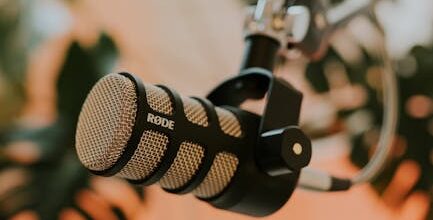
But independent creators circumvent traditional pipelines entirely. I’ve met podcasters who record episodes in home closets using Røde microphones bought secondhand from Finnish producers—then distribute via Spotify Estonia without any studio intervention at all.
This DIY ecosystem mirrors trends seen among Lithuanian YouTubers or Polish indie animators—a sign that mainstream workflows may soon face competition from well-equipped homegrown talent rather than just automation from Silicon Valley startups.
Cultural Landmines No Machine Can Dodge Yet
Every seasoned director has at least one war story about accidental mistranslations making it into final cuts—a running joke among older hands at Eesti Raadio dates back to the chaotic post-Soviet period when Western cartoons first flooded national airwaves sans proper QA checks. Today’s risks are subtler but persistent: even a single misplaced inflection can turn what should be "family-friendly" into "awkwardly formal."
Case in point? During the COVID lockdowns of 2020, several emergency PSAs were rushed out using remote-recorded talent; community feedback flagged stilted delivery almost immediately online—even though every word was technically correct per script.
No algorithm catches social context quite like a sharp-eared session director does after three cups of kohv and ten years behind the glass pane.
Looking Ahead Without Losing the Human Touch
If there’s any certainty here, it’s this: Estonia’s demand for localized audio will keep growing—not because technology makes it easier but because every new platform expects linguistic intimacy at scale."AI will never get my mother-in-law's dialect right," jokes one veteran actor between takes at Soundville Studios—and she's not wrong yet.