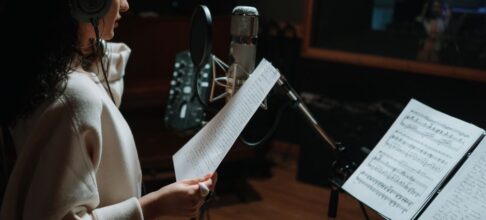
The uncomfortable truth: by early , you can’t always tell if that chirpy narration on a travel app, or the sarcastic sidekick in your favorite mobile RPG, is voiced by a person or an algorithm. A few years ago, most casting directors would have laughed at the idea of trusting big-budget English Voice Over work to synthetic voices. But here we are—where realism and fakery dance so closely together that even seasoned engineers in Los Angeles studios sometimes double-check their own session logs.
In London’s Soho district, producers at boutique localization shop LinguaForge recount how major streaming clients—think Amazon Prime Video-level—now send briefs explicitly requesting human voice talent “with audible imperfections.” Not just authenticity for its own sake; it’s become an insurance policy against the uncanny valley effect that still dogs AI-generated voices at scale. In , it was about AI augmentation. Now in , the pendulum swings back: many platforms quietly market “% organic” English Voice Over as a differentiator.
But don’t mistake this for nostalgia. The adoption curve for AI-based voice has only steepened. According to several mid-tier game studios in Eastern Europe (Gdańsk and Bucharest come up often), around % of incidental dialogue—barks, background chatter, system prompts—is now handled by what local teams call "synthetic-first" workflows. There’s no point hiring dozens of part-time actors when generative models trained on diverse accents and emotional registers can churn out hours of content overnight.
A Glimpse Inside: Streaming Platform Dilemmas
Netflix famously flirted with fully AI-powered dubbing for certain low-priority catalog titles back in late —a move that sparked heated debate among unionized actors from LA to Sydney. By , Netflix had reverted to blended workflows for English tracks: main cast recorded in-person (or remote ISDN links), secondary roles filled by high-fidelity synthesis patched by human directors using tools like Respeecher and ElevenLabs Studio Edition.
In practical terms? For a recent British crime thriller launch across Asia-Pacific markets, Netflix employed a Singapore-based post-production team. They used human narrators for lead characters but filled tertiary lines with adaptive neural voices tweaked for regional dialectal cues—at roughly one-sixth the cost and half the turnaround time compared to all-human sessions.
Meanwhile, Australian advertising agencies have taken advantage of these hybrid pipelines not just for speed but also campaign flexibility. One Melbourne-based agency (clients include Qantas and Telstra) describes testing three different voice personas—in both real and synthetic formats—for one digital billboard campaign before settling on a semi-AI blend deemed “most relatable” by focus groups.
The Irony of Authenticity — And Its Cost
Ironically, as synthesized voices improve their mimicry of natural cadence (notably with OpenAI’s Whisper v3 entering wide use this year), brands are forced to define what “authentic” even means. Some US audiobook publishers now include disclaimers noting which projects were entirely voiced by humans—a reversal from earlier years when synthetic audio carried warnings instead.
For smaller agencies or indie studios (like those cropping up around Estonia's burgeoning tech sector), budget dictates everything: full human English Voice Over is reserved only for flagship trailers or prestige games; routine tasks default to trained TTS engines fine-tuned on regional accents—often managed via cloud-based platforms like Descript or Speechki.
An American Case Study — Game Localization Reloaded
Consider HyperPixel Interactive, a mid-sized game developer based out of Austin, Texas. In prepping their cross-platform multiplayer title last autumn, they faced an impossible deadline: record over unique lines across five characters within six weeks—on top of French and Japanese localization needs. Their solution? For English Voice Over:
- All story-critical cutscene dialogue booked with SAG-AFTRA-approved actors via Source-Connect,
- Combat barks generated through ElevenLabs’ custom-trained models,
- QA pass conducted in-house with native speakers flagging any phrase deemed "robotic" or contextually off-base.
Final tally? About % of total VO runtime came from machine generation—but end-users polled couldn’t reliably distinguish which lines were synthetic versus live-recorded.
Global Patchwork: Regulation Lags Behind Practice
There’s another wrinkle—regulation hasn’t caught up to reality. In Germany and France, labor guilds push for clearer labeling requirements whenever synthesized voices appear alongside humans in streaming media exports. Yet outside Western Europe and North America, enforcement is scattershot at best; Indian e-learning platforms routinely deploy full-synthetic English instruction without user disclosure.
Voice Marketplaces Go Niche—and Neurodiverse
also marks the rise of micro-casting marketplaces catering to neurodivergent listeners or those seeking non-standard pronunciations as accessibility features—not just novelty acts. London's SenseSound Studios reports growing demand from educational app developers who want distinctly dyslexic-friendly pacing—or authentic stammers—as part of their English VO inventory.
So What Actually Sells?
It isn’t just about clarity or emotion anymore—it’s about relatability calibrated at scale. The best-case scenario? Synthetic pipelines handle bulk production while select live talent recordings serve as reference anchors (and marketing fodder). Agencies compete not just on price but on their ability to blend these elements seamlessly according to project needs—and audience sensitivities.
Does this spell extinction for classic booth sessions? Not quite yet; there’s still cachet attached to “real” performances sourced from London sound stages or LA talent pools—especially when awards season rolls around or prestige drama series launch new seasons globally.
But increasingly, success lies not in purity but subtlety—the invisible handoff between algorithm and artist that shapes how we hear stories worldwide.