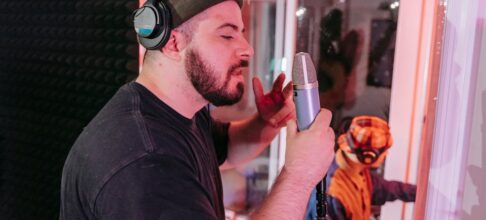
The last time anyone outside Yerevan paid real attention to Armenian voice over, it was the mid-2000s: pirated DVDs, telenovelas dubbed in hurried radio studios, and children’s cartoons with voices that sounded like everyone’s uncle. The idea that this market could ever be more than an afterthought for global content owners seemed laughable.
Yet somewhere between Netflix rolling into Eastern Europe in and the explosion of AI-driven localization tools, something began to shift. What’s strange is how few people have noticed.
The Quiet Shift: Noisy Neighbors, Silent Studios
It’s easy to find headlines about Turkish or Russian dubbing booms—their markets are ten times larger. But step inside a modern post-production house in Yerevan today (try Studio Hayk or Arvestan) and you’ll see a very different picture than even five years ago.
A recent project at Studio Hayk involved localizing an animated series for a Belgium-based kids’ streaming platform. Instead of the old pattern—one director wrangling three actors through all parts—they ran simultaneous sessions across two soundproofed rooms, each with remote direction piped in via Zoom from Brussels. Files were handed off through cloud-based asset managers (think Frame.io or similar), and final mix review happened on Slack threads spanning four countries. A decade ago this would have been fantasy territory for Armenia’s audio sector.
Who Wants Armenian Dubbing Anyway?
Ask localization execs in Warsaw or Berlin why they add Polish or German dubs to big-budget Netflix originals and you’ll get clear business logic: massive audiences, regulatory quotas, brand value. Ask about Armenian? Nine out of ten will say “not worth the budget.”
But here’s where the contradiction comes in: since , streaming platforms targeting the Caucasus region have quietly started requesting full Armenian voice adaptation as standard—not just subtitles. Two industry veterans I spoke with mention Disney+ pilots testing demand among diaspora viewers in Glendale, California (where over , Armenians live), as well as Yandex-owned KinoPoisk commissioning dubs for co-productions launching simultaneously in Georgia and Armenia.
A Workflow Nobody Predicted: From Soviet Rigidity to Cloud Chaos
Traditionalists still remember the rigid workflows of Soviet-era radio dramas: scripts printed on onion-skin paper; actors crowded around one microphone; no pickups until next week’s session. Today? A medium-sized Yerevan studio working for an LA-based indie game publisher will run voice casting online using Casting Networks (yep—Hollywood tech), then patch in directors from Paris while actors record from home booths set up during pandemic lockdowns.
In one recent case involving a narrative-driven mobile game, production stretched over six weeks and included talent based not only in Armenia but also Moscow and Berlin—each actor recording their lines separately before editors stitched them together into seamless dialog trees inside Reaper DAWs shared via Google Drive folders. This hybrid workflow has become almost routine post-.
Numbers Nobody Quotes Out Loud
Armenian language localization still makes up less than 1% of Europe’s total dubbing market by revenue—that much hasn’t changed since the late 2010s. But what industry insiders do notice is that volume has doubled since pre-pandemic days: one prominent regional agency told me they now handle roughly – full-length projects annually versus – back in . It’s growth by stealth rather than spectacle.
AI Voices: Hype Meets Reluctance
Let’s talk about synthetic voices—a hot topic everywhere else. In German studios you’ll hear engineers debating Respeecher vs Voicemod quality; US podcast outfits experiment with ElevenLabs for rapid multi-language drops.
But most Armenian clients are ambivalent about AI-generated speech. Early experiments done by a small Tbilisi-based startup with licensing rights to popular kid shows resulted in synthetic accents so uncanny valley-adjacent that test audiences preferred amateur human tracks instead. As a result, while AI tools are starting to help with script timing and voice matching, there’s genuine resistance to letting them replace flesh-and-blood performers entirely—at least for now.
Diaspora Effect: Glendale Calls Back Home
Here’s another layer nobody talks about: nearly every major Armenian dubbing project now features at least some LA- or Paris-based diaspora talent patched into local workflows via Source-Connect or similar remote recording tech. One memorable example last year saw a well-known stage actress living in Marseille cast as the lead villainess for an ARMTV historical drama adaptation—a move driven both by talent scarcity at home and by networks seeking broader cultural resonance abroad.
This cross-border model isn’t unique (see Turkish productions pulling from Amsterdam or Berlin), but its rapid normalization within tiny Armenian teams marks a quiet revolution compared to how isolated these studios were just five years ago.
Kids’ Content Drives Experimentation First—and Hardest
If there is one genre where risk-taking is happening fastest it’s children’s media—a sector forced into innovation because of YouTube Kids’ sprawling reach throughout Eurasia post-. When European animation distributor Jetpack Distribution sold “Wolfboy & The Everything Factory” into smaller Eastern markets last year, their chosen Armenian partner had three weeks’ notice to assemble a cast under new COVID-safe protocols—all rehearsals handled virtually, delivery deadlines shaved down to hours instead of days.
One producer described “organized panic” as Dropbox notifications pinged every half hour—but also called it their smoothest rollout yet thanks largely to streamlined cloud infrastructure borrowed from bigger Western partners.
Regulation? Not Exactly Driving Change Yet…
Unlike Poland (with strict cultural quotas) or Germany (where broadcasters must meet accessibility requirements), Armenia has minimal legal pressure pushing foreign content toward full native dubbing—as of early anyway. Most change is market-driven; rising expectations set by pan-regional platforms like Megogo are making basic subtitle-only offerings look second-rate overnight.
Where Does It Go From Here?
Nobody expects an overnight boom—or for major Hollywood movies to premiere day-and-date with bespoke Armenian dubs like they do Spanish or French tracks worldwide. But neither can anyone ignore how rapidly micro-studios are catching up technologically—and how quickly pipelines once reserved for London or Madrid are being spun up on laptops across Yerevan apartments after midnight shifts end at call centers downtown.
And maybe that explains why nobody talks about it enough: when evolution happens piecemeal rather than headline-grabbing leaps, those inside barely have time to look up before tackling another foreign franchise pilot dropped into their inbox from Munich or Toronto.