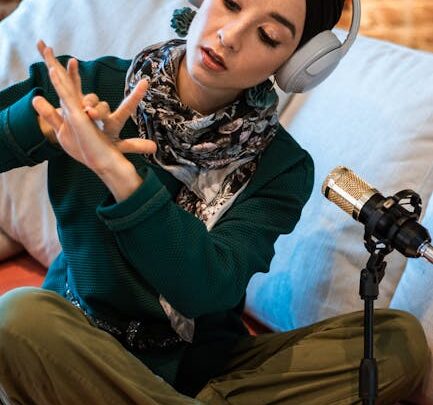
There’s a moment that happens almost weekly at a mid-sized creative agency in Dubai. An international client—say, an e-learning platform rolling out content for North Africa—sends over a script, asking for “modern standard Arabic voice over, but make it sound local and cool.” What follows is never routine. Project managers grumble about dialects, translators squabble over pronunciation, and someone inevitably brings up the infamous Netflix launch in Saudi Arabia where dubbed shows sounded more like academic lectures than binge-worthy entertainment.
The messy reality of Arabic Voice Over today isn’t just about choosing between Levantine, Gulf, or Egyptian intonations. It’s about facing a fractured linguistic market, rapidly advancing AI tools with questionable cultural nuance, and a consumer base that can sniff out “foreign” Arabic from the first syllable.
A Tale of Two Studios: London Meets Cairo
Take two studios: one boutique post house in central London specializing in global brand campaigns (let’s call them Greenlight Studios), and MegaVox Egypt, a Cairo-based dubbing powerhouse handling pan-Arab TV serials. Greenlight’s workflow looks efficient on paper—scripts arrive via email, audio engineers patch into remote talent using Source-Connect Pro, delivery within five days. But when tasked with localizing a campaign for Riyadh shoppers last spring, they struggled to recruit native Gulf speakers who could match the brand’s breezy tone without slipping into pan-Arab formalism. The result? A slick audio track technically correct—but audiences called it “robotic,” echoing complaints seen frequently on Twitter after regional ad launches.
Meanwhile, MegaVox handles volume—think + hours per year across series and commercials—but even their seasoned teams grapple with the chameleon nature of spoken Arabic. Their post-production lead described how one telecom spot required three separate recordings: Modern Standard for satellite channels; Egyptian for domestic reach; Khaliji dialect for streaming platforms targeting the Gulf. Each version required different actors and subtle re-writes to avoid alienating core audiences.
This triple-recording approach adds roughly % to production costs—and marketers are noticing.
Streaming Giants and the AI Mirage
Global platforms like Shahid VIP (MBC Group) and Netflix have poured millions into original Arabic content since —a milestone often cited by localization insiders as both blessing and curse. On one hand: budgets are bigger; on the other: deadlines are shorter and expectations sky-high. In alone, Shahid commissioned more than new original shows requiring multi-market adaptation.
Faced with scale pressure, some agencies turned to AI-driven synthetic voices from providers like Resemble.ai or Papercup. The hope? Faster turnarounds and cost savings—especially for explainer videos or IVR systems destined for pan-regional use. But here’s what happened at an Amman-based fintech startup last autumn: their AI-generated customer support lines drew ridicule on social media (“Alexa but make it Jordanian?” quipped one user). Internal metrics showed call abandonment rates up by nearly % compared to human-voiced pilots. By Q1 this year they reverted to live voice talent—a decision made easier after field-testing revealed customers trusted real voices far more when discussing sensitive financial topics.
Marketers’ Dilemma: Art or Algorithm?
In practice, most marketers now face an uneasy tradeoff:
• Use fast-turnaround AI voices at risk of sounding generic (or worse, uncanny)
• Or invest in costly multi-dialect sessions with native speakers across cities like Beirut, Cairo, Riyadh—and still risk missing some micro-nuance that only locals would catch.
During Ramadan —a prime advertising season—one major FMCG brand tried to split the difference by deploying hybrid workflows through Moroccan agency Translatio Media: main spots voiced by seasoned actors in Casablanca; digital cutdowns patched together using semi-customizable AI voices trained on North African data sets. According to internal feedback shared at an industry roundtable this year in Marrakech, digital engagement was solid but traditional TV viewers ranked authenticity much higher when surveyed—the real actors’ spots scored nearly double on perceived trustworthiness versus algorithmic versions.
Why Authenticity Still Wins (for Now)
It’s tempting for Western marketers to view "Arabic" as monolithic—the way French or Spanish sometimes get treated as single-language markets despite obvious regional quirks. But if there’s any lesson from two decades of localizing content—from satellite channels pre- to today’s TikTok ads—it’s that nuance matters more here than almost anywhere else.
Consider gaming localization: Ubisoft Abu Dhabi routinely runs player focus groups across Tunisia and Kuwait before releasing new titles regionally—not just translating menus but recording unique voice tracks tailored to each country’s slang and humor preferences. In their experience (shared privately during GDC Europe last year), even tiny tweaks—like switching “shukran” (thank you) for its Maghrebi variant—increase positive feedback loops among players by up to % in closed beta tests.
The Road Ahead Is Fragmented… And That’s Okay?
No universal solution looms on the horizon—not with generative AI still stalling on true dialectal mastery (Papercup claims progress but admits “Gulf-accented neural models remain experimental”) nor with pan-Arab campaigns forced to juggle three or four parallel audio mixes per spot just to stay credible across borders.
So what do marketers actually do? Agencies like Dubai-based TBWA\RAAD have started treating every project as fundamentally custom—even at scale—leaning heavily on regional casting directors and WhatsApp audio tryouts instead of relying solely on glossy demo reels or off-the-shelf synthesis tools.
If there is an emerging pattern amid this chaos it may be this:
delivering believable voice work in Arabic requires embracing messiness—budgeting not just extra time or money but also space for creative compromise between artifice and authenticity,
speed and specificity,
language unity and delightful discord.