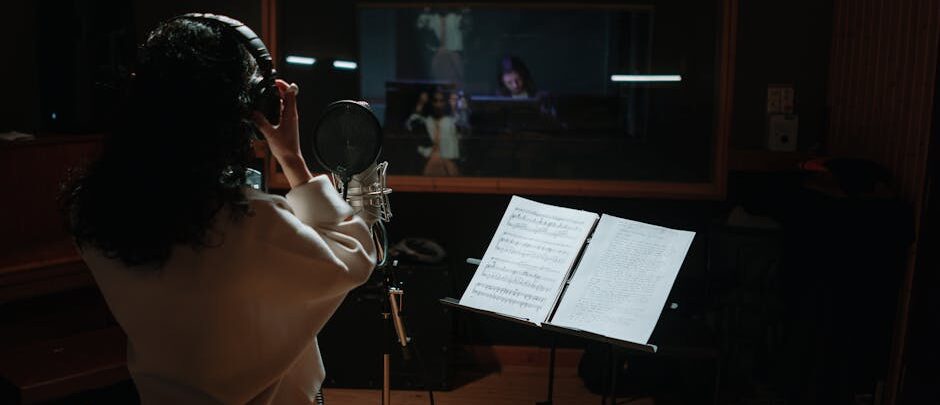
Last spring, a sound engineer in Singapore told me he’d never seen so many requests for Mandarin and Cantonese voice over talent—not just from mainland China, but from Parisian ad agencies, Tokyo game studios, and even a Canadian e-learning platform. Something was shifting. The old world of voice work—long dominated by English, Japanese, or German—had cracked open. Suddenly, Chinese voices were everywhere.
In , when Tencent Video first started pushing original web dramas internationally, the localization budgets were tiny. Most foreign platforms subtitled rather than dubbed content into Chinese dialects. But by late , Netflix was quietly testing Mandarin dubs for German thrillers; Audible’s Shanghai team was producing full-cast audio plays for the US market. If you walked into any mid-sized post-production house in Sydney or Berlin last year, odds are you’d have found at least one project needing Chinese-language VO.
The New Faces Behind the Microphone
Take Hexagrams Studio in Warsaw—a modest Polish outfit that cut its teeth localizing JRPGs for Bandai Namco. By Q3 of last year, nearly % of their audio pipeline was dedicated to projects requiring native Mandarin or Sichuanese performers. “We used to do maybe one Chinese dub a quarter,” says production manager Anna Zawadzka. “Now it’s every month.” Their recording schedule is shaped as much by WeChat availability as by studio space.
And these aren’t just quick marketing tags slapped onto global campaigns. In real workflows observed at European gaming houses like Daedalic Entertainment (Hamburg), entire character trees are voiced in both standard and regional Chinese accents—often requiring multiple casting rounds per role.
Streaming Wars Feed the Boom
One major accelerant: international streaming giants betting big on Asian originals and pan-Asian distribution. Disney+ Hotstar’s ramp-up in Southeast Asia means trailers for Indian fantasy shows now debut with three different Mandarin dubs—one each for mainland China, Taiwan, and Singaporean audiences.
Localization vendors like Iyuno-SDI report that between and late their demand for professional Chinese voice actors has more than doubled. In-house teams that once focused exclusively on Korean or Spanish now routinely handle multi-dialect scripts crossing four time zones.
A Decade Ago: The Dubbing Desert
Contrast this with the early 2010s: back then only blockbuster anime or Disney films received high-quality Mandarin dubbing outside China itself. Local brands stuck to subtitles; even big-budget games shipped with English VO only. Audio post in Hong Kong often meant scraping together freelancers via QQ groups—or patching sessions across shaky VPN lines.
Today it’s a different landscape entirely: nearly every major mobile game launch includes not just simplified but also traditional character tracks—for Hong Kong and Taipei players who expect localized slang and inflection.
China’s Soft Power…But Not How You Think
It would be easy to chalk all this up to Beijing’s cultural ambitions—the global march of C-dramas or the government’s push for soft power since Xi Jinping took office in . Certainly that matters: platforms like iQIYI and Bilibili now broker licensing deals directly with French animation studios (as seen when Studio La Cachette’s works got Mandarin dubs ahead of any English release).
But there’s another driver: Western companies want in on China—but also want to reach overseas diaspora communities and bilingual millennials everywhere from Toronto to Melbourne. In practical terms? A Brazilian edtech startup might record an entire course series simultaneously in Portuguese and Mandarin—sometimes using AI-assisted tools like Resemble.ai to pre-screen voice matches before calling human actors.
Case Study: E-Learning Across Borders
Consider Edutera Solutions, a Dutch digital learning firm whose clients include Samsung Europe and multiple Australian universities. In late they launched a suite of STEM modules aimed at APAC students—with VO recorded concurrently in six languages. Their approach? Each script is first machine-translated then handed off to regional directors who vet phrasing against local idioms (Mandarin spoken in Taipei vs Shenzhen). Only after two rounds of linguistic QA does the live actor step up—and often the same session will be streamed via Zoom to both Amsterdam HQ and a Beijing review team.
In these cross-border setups, timing is everything—especially during crunch periods where one missed handoff can delay dozens of microlearning videos by weeks.
Not Just Mainland Voices Anymore
In Los Angeles’ commercial sector there’s been a surge in requests specifically for Taiwanese-accented narrators or Cantonese dialogue coaches—as Hollywood seeks authenticity not just generic “Chinese flavor.”
Even small agencies like Moonlight Studios LA report their top-billed voice talent roster has expanded from five native speakers to over twenty since —including diaspora performers who bring unique hybrid accents prized for multicultural campaigns targeting second-generation Asian Americans.
AI Tools Change the Game—but Not Alone Yet
Of course, AI-generated voices are part of this story too—but not always as disruptors replacing humans outright. Instead, studios use synthetic voices (via ElevenLabs or Microsoft Azure TTS) during animatic stages or client previews—a workflow I’ve seen firsthand at London-based SoundFoundry Media when prepping drafts for Tencent-backed animation pilots destined for Vietnamese syndication with simultaneous Mandarin tracks.
What hasn’t changed? For final delivery on prestige projects—games launching worldwide on Steam or PlayStation Network—it still comes down to experienced human actors coached through line-by-line nuance by directors familiar with regional vernaculars.
What Comes Next?
The explosion isn’t slowing down anytime soon: as long as global content migrates across borders—and with Chinese-speaking populations spanning every continent—the need for quality voice work will only grow more specialized and competitive.