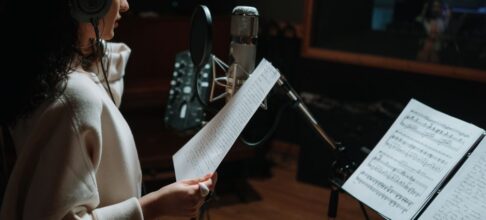
In a cramped studio off Great Portland Street in London, a seasoned British voice artist watches a waveform crawl across the screen. The session’s running late—again. The client, an American streaming giant, has dialed in from Los Angeles. Every syllable is scrutinized; every pause and intonation dissected.
This is not the glamorous side of English Voice Over (EVO). It’s the churn, the grind, and the constant negotiation between artistry and commercial demand that most outsiders never see.
Whose English Counts? Accent Anxiety and Brand Tensions
Clients want “neutral” English—but whose neutrality? American agencies insist on Mid-Atlantic tones for global campaigns, while European studios hedge bets with “international” British. At Voxonic Studios in Berlin, producers have quietly admitted they swap out London accents for softer Midlands or General American to avoid alienating younger audiences on platforms like Spotify. There’s always someone somewhere complaining about a stray 'r' or flattened vowel.
A real-world example: In , a Polish gaming company localizing for the UK market was forced to recast three main characters after negative Reddit feedback accused them of sounding “like BBC Newsreaders circa .” These retakes added 9% to their budget and delayed release by two weeks—a common scenario when English Voice Over collides with fast-moving digital expectations.
AI Voices: Hype Versus Studio Reality
It’s tempting to imagine artificial intelligence sweeping aside human performers overnight. Yet in practice, AI voice tools like Descript’s Overdub or ElevenLabs are mostly relegated to scratch tracks or quick-turnaround explainer videos—the sort produced en masse by Australian marketing agencies trying to beat Monday morning deadlines.
Take SoundPost Productions in Sydney: They use cloned voices for rough drafts but stick with trained actors for anything narrative-driven or emotionally complex. "AI can't ad lib disappointment," jokes studio manager Jess Nguyen. Still, she estimates that around –% of their yearly output now involves some AI pass before final casting—a notable jump since but far from total displacement.
The Unseen Workflow: Endless Retakes and Script Chaos
In practical terms, a typical EVO workflow is rarely linear. For Netflix-style projects managed by London-based Jigsaw24 Media, sessions can involve six-hour blocks punctuated by script revisions arriving mid-recording via Slack from LA-based writers who have never met the UK talent face-to-face.
One day last autumn, Jigsaw24 handled dialogue pickups for an animated series meant for simultaneous release in Canada and India—two versions of “standard” English clashing over schoolyard slang. The result? Three extra hours spent patching lines so nobody would be called out as "inauthentic" on social media during launch week.
Money Talks Louder Than Diction: Budgets Shape Every Decision
A dirty secret: Most mid-tier localization agencies in cities like Warsaw or Tallinn source voice talent from online pools—Voquent, Bodalgo—where rates range wildly from $ per spot to several hundred dollars per hour depending on accent specificity and turnaround time. Agencies often book three voices for one character just to hedge against last-minute creative U-turns after focus group responses roll in (a pattern echoed by Dublin-based audio post houses).
Historical Milestones Nobody Mentions Anymore
Back in –, when mobile games exploded across Western Europe, there was an arms race for dubbed content that saw even modest indies spending tens of thousands on full-cast recordings at Pinewood or Babel Studios (now defunct). Those days are gone; remote workflows powered by SourceConnect and similar tools mean even big-budget RPGs now mix talent from five countries without anyone ever sharing a booth—or sometimes even a time zone.
Talent Fatigue and Voice Protectiveness: A Growing Undercurrent
More than one veteran performer confesses off-record they’re recording more lines than ever but feeling less connected to projects. With non-disclosure agreements stacking up (one major US publisher recently required signatures covering all future updates), many actors joke about having voiced half of Steam's indie library without being able to list a single credit publicly.
Industry Patterns Worth Noting—and Questioning Further
- In Germany’s Ruhr region alone, at least four mid-sized studios now offer “voice direction as a service” explicitly tailored for Amazon Originals production pipelines.
- A spike in demand for kids’ educational content during Covid led Estonian app makers to double their annual spend on native British narrators between – (from estimated €80k/year to nearly €160k/year).
- Meanwhile, voice casting portals report that requests specifying "Gen Z-friendly UK urban dialects" have tripled since early —a sign brands are desperate not just for clarity but cultural currency.
Final Take: No One Size Fits All—Ever Again?
The inside story isn’t about technology replacing humans or one accent ruling all markets—it’s about ceaseless adaptation under pressure. Teams juggle international tastes while fighting tight budgets; talents chase credits as much as payment; directors try not to lose sleep over endless retake requests pinging across continents at midnight.
Maybe tomorrow it’ll get easier—but nobody watching these sessions closely expects it will.