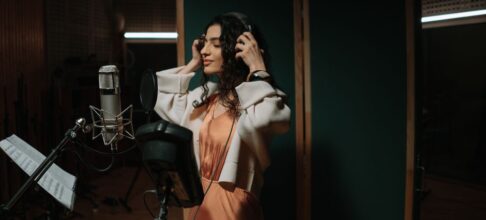
If you walk into any audio post-production suite in Sydney’s Surry Hills on a Thursday afternoon, you might catch something that feels almost anachronistic—a human voice actor, script pages in hand, soundproof glass between talent and engineer. Yet, there’s nothing quaint about what’s happening inside. This is where the collision of tradition and technology is felt most acutely in Australia’s voice over industry.
When the Accent Isn’t Just an Accent
Australian voice over isn’t just about twang or vowel sounds. For brands like Qantas or Bunnings Warehouse—the latter famous for its gravelly, everyman read—a recognizable Australian identity has always been non-negotiable. But there’s a deeper complexity at play: how do these companies adapt their messaging for platforms as different as TikTok ad breaks and Netflix trailers?
In practice, real-world campaigns at CHE Proximity or Clemenger BBDO rarely settle for one-size-fits-all. For example, during a 2022 launch for a global streaming platform entering Australia (think Disney+ scale), multiple cuts of each promo were recorded—some with broad Australian accents for regional TV and others with more neutral reads intended for New Zealand or international placement. Each take went through A/B testing across programmatic channels to measure retention rates by geography; variations showed up to 18% difference in viewer engagement depending on accent intensity.
The Anatomy of a Modern Studio Workflow
What does production actually look like? Let’s follow a project timeline from We Love Jam Studios in Melbourne, which regularly handles both commercial and narrative projects:
Every step reflects both technological adoption and cultural sensitivity unique to this market.
The Shadow of Artificial Intelligence (and Its Limitations)
AI tools like Descript's Overdub and Respeecher have made headlines worldwide, but adoption patterns in Australia remain cautious—especially among major broadcasters like ABC or SBS. In late 2023, I spoke with two post supervisors at Cutting Edge Brisbane who described using synthetic voices only for scratch tracks or rapid turnaround radio spots where budgets simply didn’t allow studio time.
One concrete case: a mid-sized media agency running automotive campaigns used Resemble AI to generate placeholder reads while awaiting final sign-off from their client in Perth—saving roughly four days per campaign cycle compared to traditional scheduling. Still, none of those AI performances aired publicly; all final outputs reverted to seasoned voice artists due to ongoing concerns over emotional subtlety and legal rights management under Australia’s comparatively strict copyright regime.
Case Study Snapshot: Narration Meets Niche Content
Consider Beyond Productions’ workflow on "MythBusters Down Under" (2019). Producers insisted on authentic local narration not just for branding but because overseas viewers identified uniquely with certain phrasings (“ute” instead of “pickup truck”). Working sessions required six separate native speakers—from Melbourne through Darwin—to cover both national TV edits and Discovery Channel exports targeting North America and Asia-Pacific cable packages. It wasn’t just about filling seats; it was about matching linguistic microclimates within Australia itself.
This need for granular authenticity means many Australian studios still resist globalizing trends toward remote-only pipelines seen elsewhere—in Poland or Germany, teams have moved faster toward fully virtual workflows post-2020 lockdowns—but here, face-to-face direction remains stubbornly popular when nuance matters most.
Pay Rates, Market Size—and Why Scale Matters Less Than You Think
Australia’s overall VO market is dwarfed by US standards (market estimates hover around AUD $80 million annually versus multi-billion-dollar American figures). Yet per-minute rates are fiercely protected by MEAA guidelines—$350–$500/hour is standard even for e-learning modules destined solely for WA schools’ intranets. Large agencies like Voices.com see less traction here than in North America; local representation still dominates despite occasional cross-Tasman collaborations.