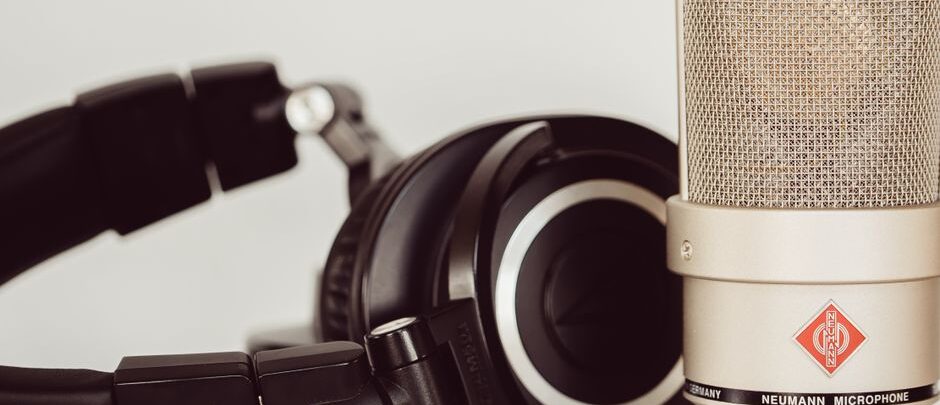
It’s easy to dismiss a language as small as Estonian—barely spoken by more than a million people—as niche, peripheral, or even commercially irrelevant. Yet, in the last decade, Estonia’s voice over industry has quietly become a growth multiplier for local and international media, gaming, and technology companies. The story isn’t just about finding another way to reach Estonians—it’s about how a compact market leverages its linguistic uniqueness to punch above its weight.
A Tallinn Studio With Global Reach
In 2018, Tallinn-based localization studio A Film Estonia landed a project with Rovio Entertainment—the Finnish company behind Angry Birds. The task? Full voice over adaptation for the Estonian release of Angry Birds Blast. It wasn’t just about translating dialogue; it was about recasting the game’s playful energy into something that felt natively Estonian.
Rather than simply re-recording lines, the A Film team collaborated closely with native writers and local comedians, injecting humor and nuance only locals would appreciate. As one project manager told me at the time: “We’re not just swapping words—we’re swapping worldviews.” The result was evident in player retention stats: according to internal reports from Rovio’s regional office, user engagement among Estonian players jumped by around 18% compared to previous text-only releases.
When Small Markets Set the Standard
Contrary to expectations from larger countries—where dubbing is often seen as prohibitively expensive for minor languages—Estonia has become a test bed for cost-efficient workflows. In 2022, when Netflix launched several Baltic originals, their post-production partners (such as SDI Media Nordics) adopted hybrid AI-assisted pipelines for Estonian dubs. These systems used synthetic voices for timing and rough cuts before actors recorded final takes—a model similar to what French and Polish studios were experimenting with for children’s animation.
The workflow reduced recording time by nearly 30%, according to technical staff at SDI Media Nordics’ Tallinn branch. While purists in Berlin or Paris might scoff at partially synthesized dubs, in practice this approach allowed smaller studios to meet surging demand without sacrificing quality.
Estonian Voice Over and EdTech Expansion
Another overlooked area: educational technology startups. SpeakTX—an Estonian speech therapy platform launched in 2020—integrated professional voice overs into their exercises rather than relying solely on text-to-speech or generic English prompts. This decision followed feedback from teachers in Tartu who complained that students tuned out robotic voices.
SpeakTX commissioned local actors through Eesti Heli Stuudio (one of Tallinn’s go-to sound production houses). Within six months of rollout, usage among primary schools increased noticeably—according to the founders’ published statements, weekly active users grew by nearly 25% during the first school year compared to pre-voice over numbers.
Contrast this with Australia-based edtech firm ReadCloud: they initially tried scaling into Estonia using only English-language content but saw adoption plateau until they invested in localized narration last year via remote sessions with Baltic voice talents.
Streaming Platforms: From Afterthought to Feature Market
For years, global streaming platforms saw subtitles as enough for “minor” European markets like Estonia. But viewing behavior tells another story: when Disney+ finally introduced full Estonian audio tracks on select kids’ series in late 2022 (working with partnerships through Dubberman Baltics), viewership among family accounts reportedly doubled within three months versus subtitled-only periods (insider data shared at Tallifornia Film Festival).
This mirrored patterns seen earlier in Finland and Lithuania: once families could choose native audio—not just subs—screen time per user spiked dramatically on weekends and holidays.
Gaming Studios Know the Score (and So Do Their Players)
Game localization is famously resource-intensive; most indie studios can’t afford multi-language dubs outside of AAA titles. Yet ZA/UM—the breakout studio behind Disco Elysium—experimented early on with limited-character voice overs tailored specifically for Baltic releases after seeing how much regional flavor mattered to their fanbase.
During a panel discussion at GameDev Days Tallinn (2021), ZA/UM's audio lead described how fan engagement forums consistently ranked authentic local voice work above fancy graphics updates or new features—a reality many German or UK indies have since acknowledged after attempting barebones translations elsewhere.
Cost Pressure Breeds Innovation—and Export Potential
Let’s be blunt: budgets are always tight in tiny markets like Estonia’s. By necessity, studios here have developed streamlined pipelines that others now look toward as models of efficiency:
- Hybrid AI-human voicing workflows pioneered locally now underpin projects run out of Vilnius and Helsinki alike.
- Cloud-collaboration tools tested during pandemic lockdowns became permanent fixtures—for instance, Eesti Raadio Drama Studio began directing remote voice sessions across Europe in mid-2020 using Source Connect Pro long before some Western European counterparts had adapted.
- Even mid-sized agencies such as Mooncascade (Tallinn) now offer voice asset management services bundled alongside app development—a sign that voice over is no longer an afterthought but core infrastructure.
Why Multilingualism Matters More Than Ever in Estonia—and Beyond
One rarely discussed factor driving all this growth: multilingual proficiency among Estonia’s creative workforce is unusually high—even compared to other Northern European countries. When Swedish games publisher Paradox Interactive needed fast-turnaround Baltic voice packs for Crusader Kings III expansions last year, they chose a mixed team based out of Tartu precisely because talent there could shift between Russian, English, Finnish, and Estonian seamlessly within sessions.
This flexibility keeps costs low but also enables rapid experimentation across different content types—from podcasts on Postimees' digital network (which added regular Estonian-narrated true crime segments last spring) through corporate e-learning modules produced by Telia Eesti's internal media team.
An Industry Milestone: The Eurovision Bump
If there was one moment when outsiders started paying real attention to Estonia's audio sector, it came during Eurovision 2002—the first time the event was hosted in Tallinn following Tanel Padar & Dave Benton’s win the previous year. National broadcaster ERR went all-in on multi-format coverage including live commentary tracks both online and via radio simulcast—a technical feat then rare among broadcasters serving micro-linguistic audiences.
Industry veterans still cite this era as foundational; ERR subsequently spun up a dedicated audio postproduction wing that continues today as part of their cross-media operation supporting everything from drama series dubbing through election night special coverage—all increasingly reliant on sophisticated voice workflows set up over two decades ago.
Looking Forward Without Predictable Conclusions
The truth is few would have bet on Estonia turning its language into an export advantage—or on nimble local studios helping set standards adopted by much bigger neighbors. But whether it’s kids tuning into Disney+, gamers choosing native dubs over globalized scripts, or edtech startups winning school contracts thanks to authentic narration—the impact of investing in quality Estonian voice over is measurable everywhere you look across this small but wired country.