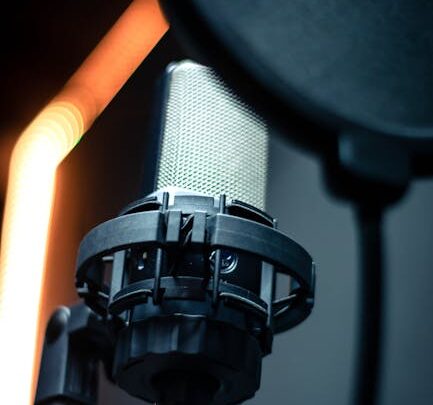
It’s hard not to feel a certain dissonance in the soundproofed corridors of London’s Soho or Los Angeles’ Burbank. On one side: seasoned voice actors sharpening pencils for their next session, prepping pages of dialogue for yet another streaming adaptation. On the other: producers with budgets sliced thin, comparing quotes from AI voice synthesis startups out of Tallinn or Bangalore. If you listen closely—really listen—the world of English voice over is less about smooth delivery than it is about friction.
The Quiet War Over Authenticity
Since the Netflix-led content explosion around , demand for English-language voice work has soared—especially as Korean dramas, Polish crime series, and Spanish fantasy shows began hitting global platforms. But this boom created its own paradox. In , when Squid Game rocketed up worldwide charts, LA-based localization studio VSI Los Angeles received requests from at least six regional branches of major streamers asking for “neutral” English voices—a mythical accent that doesn’t really exist outside corporate glossaries. Casting directors spent weeks debating whether to go transatlantic, mid-Atlantic, or just plain American West Coast.
The result? A patchwork of accents that somehow all get called "standard." Ask anyone who worked on BBC Studios’ international dubs between and —they’ll tell you there is no such thing as an accentless English voice over.
A Workflow From Warsaw (And Why It Matters)
Take a typical project in a mid-sized Warsaw dubbing house like SDI Media Poland (now Iyuno-SDI Group). The process starts with a raw script translated by local linguists into international English—not British or American per se but something tailored to avoid jarring phrases ("lift" becomes "elevator," "lorry" switches to "truck").
Next comes casting—a weeklong parade of auditions piped over Source-Connect to directors sitting in Stockholm or Toronto. Rarely do these actors ever meet face-to-face; direction happens via laggy Zoom calls, often with three time zones in play.
After recording (usually scheduled between 10am and 6pm CET to juggle both US and Asian clients), files are uploaded overnight to cloud servers so North American QC teams can review before their morning coffee.
This cycle—translate, cast remotely, record locally, review globally—has become standard among European studios handling English voice overs for Amazon Prime Video originals since at least .
When Technology Isn’t a Silver Bullet
AI-generated voices arrived loudly around with companies like Respeecher making headlines after de-aging Mark Hamill’s vocals for Disney’s The Mandalorian. Yet even now, real adoption remains fragmented.
In practice? Only about –% of commercial advertising spots produced by Sydney-based agency We Are Social Australia used any synthetic narration in —and those were mostly short-term explainer videos where turnaround trumped nuance. Full-length drama remains stubbornly human-driven: “There’s still no replacement for subtlety,” says Maya Hartnett, casting director at London’s GCVRS studio.
Voice-over projects for triple-A video games—think Ubisoft Montreal's Assassin’s Creed franchise—still fly in actors from across Europe each year despite rising costs. As recently as Q4 , GCVRS coordinated sessions with ten different native-English talent types: Scottish Highlands brogue for NPCs; clipped RP for villains; generic US Midwest for player characters. No neural net can improvise banter on the fly during rewrites at midnight.
Price Pressures and Volume Games
Rates haven’t kept pace with demand—or inflation. According to Soundlister’s freelance surveys in late , entry-level UK voice artists quoted £–£ per finished hour for basic e-learning narration. By comparison: top-tier talent working on Netflix originals might command upwards of £1k per episode—but those jobs are rarefied air for most.
Bulk buyers like localization giants TransPerfect or Deluxe Media have quietly shifted more non-broadcast work to remote home studios since the pandemic hit (remote production accounted for nearly half their volume by late ). This shift lets them commission hundreds of hours monthly from dozens of freelancers scattered from Manchester to Manila—all while sidestepping traditional union arrangements.
Not All Voices Are Created Equal (Or Paid Equally)
A curious pattern emerges if you watch anime dubs handled by Texas-based Funimation compared to live-action European imports dubbed in Berlin or Madrid studios: American productions tend toward hyper-expressive reads (“over-the-top,” some say) while German teams favor subdued delivery aiming at realism—even if source material is wild fantasy.
This divergence isn’t just stylistic—it reflects audience expectations shaped by decades of local broadcast standards. Attempting a single formulaic approach rarely works across markets—a lesson painfully learned by French mobile game publisher Voodoo when they tested AI-only English voices on their latest titles in Canada last year; user retention dropped noticeably compared to previous human-narrated versions according to internal reports leaked on LinkedIn forums.
Milestones That Still Matter: An Industry Rooted in Craft
Go back thirty years— saw Disney’s Lion King set new benchmarks not just in animation but global dubbing practices. For the first time on that scale, regional English versions were produced specifically for Singaporean and South African audiences rather than relying solely on North American tracks. Today’s workflows may be digital but remain haunted by these early experiments—the search for authenticity never really ends.
Ask veterans at New York City’s AudioWorks Producers Guild (established pre-Internet)—they’ll admit that despite software advances and cheaper distribution channels post-2010s streaming boom, directorial notes scribbled onto scripts (“try more warmth,” “reduce sibilance”) endure through every technological leapfrog.
Final Take: Beyond Hype And Into The Booths Again?
For all the talk about disruption—from remote pipelines in Bratislava to text-to-speech engines trained on Hollywood archives—the real pulse of English voice over still beats within booth walls lined with foam panels and battered mugs full of honey tea.
Producers keep pushing boundaries because budgets force their hand; actors keep carving out niches wherever accents are needed; AI keeps nipping at everyone’s heels but hasn’t quite devoured them yet. And somewhere between translation checklists and waveform edits lies an uncomfortable truth: Every job tries (and usually fails) to sound like it was easy all along.