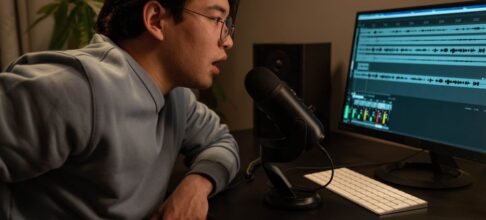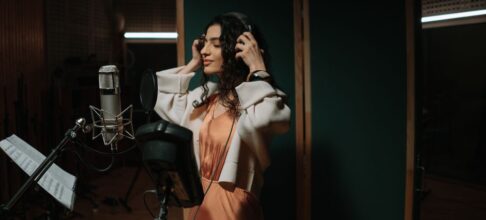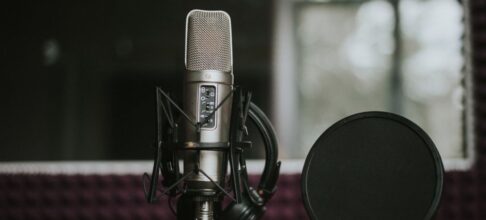
Crack open a booth door in Prague or Brno these days and you’ll find more than a microphone and a script. There’s an odd tension: the unmistakable scent of opportunity, with just enough anxiety to remind everyone that the ground beneath them is quietly shifting. “We’re being asked to deliver two versions—AI and human—for the same campaign,” says Martin, a senior project manager at Studio Beep. “And no one is quite sure which will air.”
In the early 2000s, Czech voice work was almost entirely about live sessions for local TV—think Česká televize children’s cartoons or dubbed German cop shows on Nova. The workflow was simple: client sends script, studio books talent, engineer records, director shouts notes through glass. Done by lunchtime, invoice by Friday.
The Netflix Effect Hits Vinohrady
Then came streaming. When Netflix launched its full Czech UI in 2018, studios like SDI Media Czech (now part of Iyuno) saw a flood of new requests—full-cast dubs for prestige dramas, localized kids’ animation, even documentary narration. Overnight, small teams accustomed to two-week deadlines were suddenly juggling parallel projects with midnight FTP uploads and Google Sheets tracking every syllable.
A localization producer at SDI Media recalls how workflows ballooned: “For season one of ‘The Witcher’, we had 30 actors on call plus three directors rotating shifts. We’d never run so many simultaneous sessions.” By 2022, demand for Czech language content on global platforms had doubled compared to pre-Netflix years—a seismic shift for an industry where most freelancers once relied on national broadcasters.
Gaming Demos and Discord Auditions
But perhaps nowhere did things get stranger than in game audio production.
Take Bohemia Interactive—the Arma series developer based outside Prague—as a microcosm. In typical runs for their military simulations or DayZ updates circa 2019–2021, casting would involve open calls posted on Facebook groups and Discord servers frequented by semi-pro actors and enthusiastic amateurs alike. Sessions often took place after hours in makeshift home booths assembled during lockdowns; files zipped over WeTransfer by dawn.
One surprising result? A new crop of voices with zero prior studio experience now appears alongside established names in AAA titles distributed worldwide—a trend paralleled by indie developers from Ostrava to Liberec who simply can’t afford traditional agency rates anymore.
At least one mid-sized localization company in Brno reports that nearly 40% of its VO projects now include non-union talent discovered through online forums—a far cry from the rigid casting protocols seen even five years ago.
The AI Elephant Inside Every Booth
No editorial about Czech-language voiceover can avoid the artificial intelligence question any longer. From late 2022 onwards, Prague-based post houses like Soundsquare have quietly tested neural text-to-speech tools such as ElevenLabs’ API or Respeecher’s voice cloning suite—not always with public fanfare.
For e-learning modules, corporate explainers and interactive kiosks (think train station ticket machines), AI-generated voices are already filling low-budget needs that would previously have gone unfilled—or been voiced by whichever sound engineer was handy at 6pm.
But real industry friction comes when agencies request both synthetic AND human reads for TVCs or major brand campaigns—as mentioned earlier by Studio Beep’s Martin. The production team delivers both; marketing weighs cost against authenticity. Rumor has it that several April launches for FMCG brands actually went live using hybrid edits: human VO up front for impact, AI filling out less critical sections to save costs.
Historical Echoes: From Samizdat Tapes to Streaming Giants
There’s irony here too—a generational loop-back of sorts. Old-timers recall how illegal samizdat dubbing under communism meant recording entire films over VHS tapes in cramped flats using whatever voices could be found (and trusted). Now we see parallel DIY workflows—except this time driven not by politics but by globalization and tech disruption.
Even veteran talents like Jiří Dvořák (the iconic Czech Bond) have commented at industry panels about “the strange feeling” when hearing their own voice modeled synthetically on demo reels pitched abroad—a phenomenon nearly unimaginable as recently as 2015.
Rates Frozen While Workflows Multiply
If there’s a universal complaint among working Czech VO artists today it’s this: workloads are up but per-project rates remain stubbornly close to early-2010s levels—often €100–€150 per spot for commercials destined only for local radio or YouTube prerolls. Streaming series work sometimes pays better (€250–€350 per episode lead role), but requires multiple takes plus ADR pickup sessions across weeks—not counting endless NDA paperwork and digital asset management chores now standard in all major studios.
Studio managers quietly admit that turnaround times are getting tighter even as budgets flatline; one Prague facility estimates their average project cycle shrank from four days to just under two between 2017 and late 2023—even faster if dealing with pan-European campaigns targeting Polish, Slovakian, Hungarian markets simultaneously.
What Makes It "Czech" Anyway?
Yet despite—and perhaps because of—the churn and uncertainty, some uniquely local flavors persist:
- Rapid adaptation between formal register (“vysoká čeština”) required for government spots versus slang-heavy scripts for YouTube influencers;
- Careful negotiation around gendered language reforms increasingly demanded by younger clients;
- Intense debates about whether imported Anglicisms should be phonetically adapted (a battle played out repeatedly in automotive ads).
In practice? Teams routinely record multiple variants—traditional vs modern phrasing—in each session so clients can decide last minute which lands best with target demos.
A View from Berlin (and Beyond)
Contrast this chaos with workflows observed at German studios such as Berliner Synchron or VSI Berlin:
in Germany there remains stronger unionization and clearer rate cards; most major streamers accept only fully licensed union talent except in ultra-low budget cases (webisodes or pilot tests). Several Czech producers privately admit they envy this stability—but doubt it will ever take root east of Dresden due to historical fragmentation among local studios.
Meanwhile some Australian agencies adopting pan-European media buys now insist on direct-to-platform delivery via Adstream or Peach Connect—a technical headache requiring Czech studios to upgrade metadata management processes almost overnight just to stay competitive within integrated EU/AU campaigns.
Will Synthetic Win Out?
So what happens next? No easy answers—but watch closely:
a clutch of small startups around Brno have begun offering “voice sampling” services promising rapid turnarounds using proprietary AI models trained exclusively on native dialects—from Olomouc intonation quirks to Karlovy Vary lilt—all marketed directly toward SaaS e-learning companies hungry for multi-region product launches without blowing out budgets on dozens of separate bookings.
Yet even their founders admit they struggle convincing established ad agencies still loyal to familiar human names—the same ones who’ve kept Prague’s classic sound booths humming since Havel’s Velvet Revolution made foreign co-productions possible again back in the '90s peak dubbing era.
Is anyone winning? It depends whom you ask—and whether your voice can be heard above the algorithmic noise.