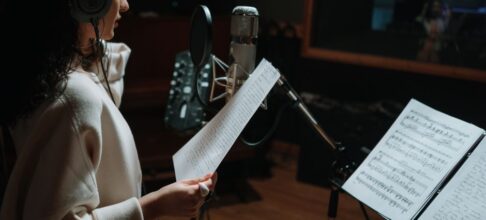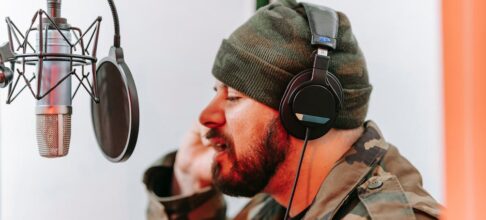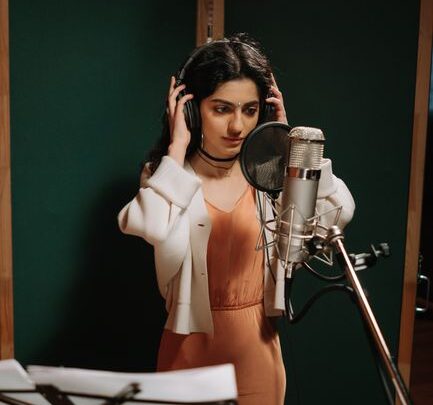
The recording light flickers on inside a soundproof studio in Amman. Rana, a seasoned voice artist, glances at her script—half marked in red pencil, half reprinted at the last minute from a WhatsApp voice note. The director’s instructions are contradictory: “Sound formal but not too classical… Make it pan-Arabic, but with warmth.”
This is not rare. In fact, such scenes play out daily across studios from Cairo to Dubai and even Berlin, where Arabic localization work has found new homes amidst Europe’s expanding demand for regional streaming content. The tension between linguistic authenticity and commercial universality sits at the heart of the Arabic voice over industry—a sector that resists simplification.
Where Neutrality Collides with Local Flavor
In practice, most major international brands—from Disney+ MENA operations to Ubisoft’s Middle East gaming releases—insist on Modern Standard Arabic (MSA) for their voice overs. MSA is considered a safe bet: widely understood, without favoring one country’s dialect over another. Yet as several Egyptian production managers have confessed off record since late 2022, audiences often perceive these neutralized performances as cold or unnatural.
Case in point: when Netflix launched its original drama "Paranormal" in 2020 with an MSA dub alongside local Egyptian dialogue tracks, regional viewing data suggested higher engagement for the dialect version in Egypt and Sudan—around 60% higher completion rates according to two Cairo-based dubbing supervisors involved in post-production.
But neutrality is hardwired into most workflows because projects must scale efficiently across 22 countries. Projects handled by Jordan’s Masriya Media or Lebanon-based Studio Vision typically default to MSA unless a specific market segment demands otherwise.
Revision Loops and the Voice Artist’s Dilemma
Recording sessions rarely run smoothly. In studios like Sound & More (Beirut), directors juggle not just pronunciation guidelines but also audience expectations around tone and emotion—a minefield given how differently humor or authority registers from Rabat to Riyadh.
One real-world scenario emerged during the adaptation of a European animated series for pan-Arab broadcast (mid-2010s). Early sessions featured high-energy performances reminiscent of American cartoons; feedback from Saudi Arabian test audiences described them as “childish” and “inappropriate.” The result? A full round of retakes, shifting toward subtler delivery styles that better fit Gulf norms while keeping diction clear enough for North African viewers.
Even AI-powered tools like Respeecher or WellSaid Labs—adopted experimentally by two Emirati agencies in 2023—struggle here. Synthetic voices trained on standard speech patterns can’t yet match a human actor’s nuanced code-switching between classical phrasing and colloquial undertones necessary for credibility.
Tech Adoption: Cautious Steps Forward
Digital platforms are shaping new workflows—but not without hiccups. Since 2019, several German-based localization houses working on documentary packages for Arte TV have started integrating cloud review tools like Frame.io to speed up client approvals across time zones. While this has shaved project turnaround times by roughly 15–20%, it also adds pressure on linguists who now field near-instant feedback from multiple regional reviewers—all with strong opinions about accents and idiomatic choices.
In real campaigns observed in Australia’s multicultural agency circuit (notably Sydney-based Adcreators), producing short-form ads targeting Arab diaspora requires sourcing talent able to shift fluidly between Levantine and Gulf intonations within a single session—a challenge rarely addressed by off-the-shelf AI solutions as of early 2024.
Trust Issues: Sourcing Genuine Talent vs Fast Turnarounds
The rise of remote casting platforms like Voices.com has enabled faster talent sourcing since the pandemic era began in early 2020s. However, agents at UAE's Wavo Studios report that nearly one-third of auditions submitted for high-profile ad campaigns are rejected due to "unnatural" delivery—usually because non-native speakers attempt generic MSA or use outdated phrasing picked up from literary sources rather than live media.
This trust gap means old-school studio vetting remains dominant among established players such as Rotana Audio Visual Co., especially when voicing sensitive content like government PSAs or children’s educational programming destined for Saudi national TV networks.
Mini Case: Gaming Studios Face Accent Anxiety
When Poland's CD Projekt Red prepared an Arabic audio patch for "Cyberpunk 2077" post-launch (late 2021), they partnered with Moroccan and Lebanese studios rather than outsourcing entirely via global vendors. According to their localization lead interviewed at Gamescom Berlin that year, only about 25% of initial takes were approved without revision—the rest flagged either for unintended cultural references or accent drift mid-dialogue tree.
The final workflow involved bilingual QA teams rotating between Casablanca and Beirut offices using shared project management dashboards (Trello/Slack hybrid). This multi-country approach added complexity but resulted in far fewer negative user reviews compared to earlier attempts by rival studios relying exclusively on standardized voices sourced outside the region.
Unspoken Rules—and Unmet Needs—in Script Adaptation
Translating scripts isn’t straightforward substitution; it means confronting taboos head-on. Anecdotes abound about jokes scrubbed clean (“too risqué”), direct translations altered lest they contradict local customs (“don’t mention pork products”), or emotional climaxes toned down so as not to appear melodramatic—a pattern especially pronounced during Ramadan-season campaigns orchestrated by Cairo-based ad agencies serving GCC clients.
Yet budget constraints persist: mid-sized studios estimate that only about 10–15% of projects allow extra rehearsal time for script adaptation before recording begins. For comparison, English-language dubs typically allocate twice as many hours per episode according to two British producers who collaborated with Al Jazeera Children’s Channel circa 2015–2018.
Looking Back: From Tape Reels to Cloud Platforms
Arabic voice over work dates back well before digital tools took hold; older engineers recall reel-to-reel edits at Kuwait TV headquarters during the early satellite expansion era (late '90s). By contrast, today’s projects almost universally involve DAWs like Pro Tools running on networked Mac setups—even small Tunisian outfits now collaborate virtually with mixers based abroad thanks to fiber connectivity improvements post-2017.
Despite this modernization wave, some aspects remain stubbornly analog—not least relationship-building between directors and veteran performers who still command premium fees (upwards of $200/hour) based on reputation alone rather than agency rosters posted online.
Final Thought: Authenticity Is Messy Business
There is no neat formula underpinning successful Arabic voice over execution—it is equal parts craft, compromise, improvisation and cultural negotiation. Any observer spending time inside these studios quickly learns there are always more stakeholders involved than first appear: clients chasing reach metrics; artists defending nuance; directors threading needles between tradition and trendiness; audiences whose preferences mutate faster than any style guide can be updated.